How a General Dentist in Bakersfield CA Detects Issues Early
Most dental problems do not begin with pain. They begin quietly, in places patients cannot see and often cannot feel. A small area of demineralization along a molar groove, a tiny crack under an old filling, gum tissue that bleeds just a little more than it did six months ago, subtle wear on the front teeth from nighttime grinding, a suspicious shadow at the edge of a root on an X-ray. These are the moments when dentistry does its best work, not after damage has spread, but before it turns into a root canal, extraction, implant, or emergency visit.
That is where a skilled General dentist in Bakersfield CA earns trust. Early detection is not one dramatic event. It is a disciplined process built on observation, pattern recognition, imaging, patient history, and routine follow-up. It also depends on judgment. Not every stain is decay. Not every sore spot is an infection. Not every bit of recession requires aggressive treatment. The value of a good general dentist is the ability to tell the difference early, while options are still simpler, more conservative, and less expensive.
In practice, early detection starts long before a patient opens wide. The appointment begins with context. A dentist wants to know what has changed since the last visit, whether there is sensitivity to cold, pressure, sweets, or biting, whether headaches have become more frequent, whether dry mouth started after a medication change, whether a patient has noticed bleeding, bad breath, jaw fatigue, loose teeth, or food trapping between certain teeth. None of those details is trivial. Often the earliest clue comes from something a patient mentions casually, almost as an aside.
The routine exam is more revealing than it looks
To many patients, a checkup can seem simple. Someone counts teeth, checks the gums, glances at the tongue, and reviews X-rays. From the outside, it feels quick. From the clinical side, it is a layered exam. Each step is gathering evidence.
A General dentist is looking at color, texture, contour, symmetry, movement, and response. Healthy gums have a different appearance from inflamed gums. A stable old filling behaves differently under an explorer than one with breakdown at the margin. A tooth with a hairline fracture can look perfectly normal until the patient describes a sharp zing when releasing pressure after chewing.
The exam usually starts with soft tissue. That means the lips, cheeks, tongue, floor of the mouth, palate, and throat area that is visible in a dental setting. Bakersfield patients, like people anywhere in California, bring a wide mix of habits and risk factors, from tobacco and alcohol use to chronic dry mouth, acid reflux, stress-related clenching, and high-sugar snacking during long work shifts. A general dentist screens for irritation, ulcers, patches, lumps, and tissue changes that should be monitored or referred. Catching an abnormal lesion early can matter far beyond dentistry.
Then the attention moves to the teeth themselves. A good dentist studies more than cavities. They evaluate existing restorations, enamel wear, alignment, bite patterns, recession, root exposure, and signs of trauma. If one lower molar shows fresh wear but the surrounding teeth do not, that may point to a bite imbalance or grinding habit rather than simple aging. If a patient keeps getting decay around the same old crown, the issue may be the crown margin, home care difficulty, dry mouth, or all three.
Patients sometimes expect that if something is wrong, it will be obvious. It often is not. Early cavities can appear as chalky white changes before they become brown holes. Gum disease may start with mild bleeding long before teeth feel loose. A cracked tooth may show no visible split line, especially when the crack is internal or hidden under a filling. Detecting those problems early takes repetition and comparison over time. That is one reason regular recall visits matter so much. A single photograph means less than a sequence. A single pocket measurement matters less than the trend.
X-rays reveal what the eye cannot
Even the best clinical exam has limits. Decay frequently develops between teeth where direct vision is blocked. Bone loss happens below the gumline. Infections at the root tip begin inside the bone. An impacted tooth, cyst, or failing restoration can stay hidden until imaging brings it into view.
Dental X-rays are one of the most important tools for early detection, but they are not used blindly or excessively. A careful dentist chooses them based on age, risk, symptoms, and timing. A patient with low decay risk and stable history may not need the same frequency as someone with recurrent cavities, extensive https://riverqcoo399.quantlynix.com/posts/why-a-general-dentist-is-essential-for-ongoing-smile-maintenance dental work, or active periodontal disease.
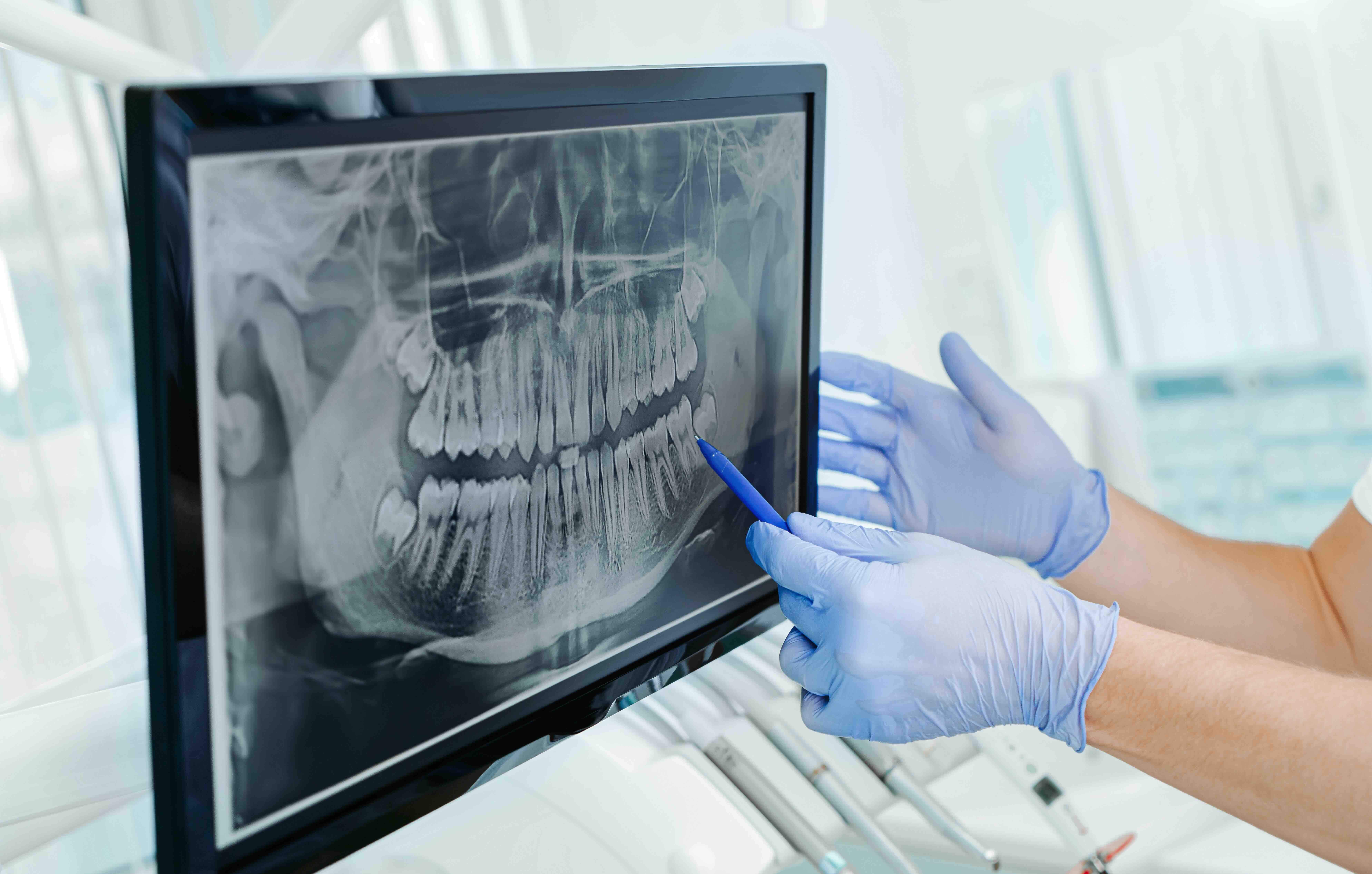
Bitewing X-rays are especially useful for spotting decay between back teeth and for monitoring bone levels around those teeth. Periapical images show the full tooth and root, which helps identify abscesses, root fractures, or changes near the root tip. A panoramic image can offer a broader view of the jaws, sinuses, impacted teeth, and other structures.
What matters is not just taking images, but reading them carefully and placing them in context. An early cavity on an X-ray may still be small enough for prevention and monitoring, especially if it has not broken through the enamel. Another radiolucent area, in a patient with dry mouth and frequent snacking, may deserve faster intervention because the risk of progression is high. Dentistry is rarely just image plus treatment. It is image plus symptoms, history, exam findings, and judgment.
Gum measurements tell a story before patients feel one
Periodontal disease is one of the clearest examples of why early detection matters. Many people assume they would know if they had gum disease. In reality, mild to moderate periodontal changes can progress quietly. There may be some bleeding while brushing, a little puffiness, maybe occasional bad breath, but not much pain. Meanwhile, the supporting structures around the teeth are changing.
During a periodontal exam, the dentist or hygienist measures the depth of the spaces between the teeth and gums. They also note bleeding, gum recession, plaque buildup, calculus deposits, tooth mobility, and bone levels on X-rays. Those numbers are not just data points. They help track whether the tissues are stable, inflamed, or breaking down.
A patient may come in convinced the issue is “just sensitive gums,” when the real concern is early bone loss around several molars. Another patient may have recession from aggressive brushing rather than infection. The treatment path is different in each case. Early periodontal detection gives the patient a chance to reverse gingivitis, slow disease progression, and avoid the more serious mobility and tooth loss that can happen later.
In Bakersfield, where many people work physically demanding jobs and may put off care until something hurts, periodontal disease sometimes surfaces later than ideal. That is not unusual. What matters is that once it is identified, the dental team can intervene with scaling, improved home care coaching, more frequent maintenance, and monitoring of sites that are likely to worsen.
Old dental work often gives the first warning
A large share of early detection involves watching what has already been treated. Fillings do not last forever. Crowns can loosen or develop leakage at the edges. Bonding can stain and chip. Root canal treated teeth can crack. Wear patterns can shift around a bridge or implant. Dental work ages, and the mouth changes around it.
One of the most common situations in general practice is recurrent decay around an existing filling. The patient often has no pain. Maybe food gets stuck there more often. Maybe floss shreds. Maybe nothing at all feels different. But a close exam may show a rough margin, a dark shadow, or softness near the edge. On an X-ray, the area may show a suspicious outline under the restoration.
This is where experience matters. Not every margin that looks imperfect needs replacement. Replacing restorations too aggressively can remove healthy tooth structure. Waiting too long can allow decay to spread deeper. A thoughtful General dentist aims for the narrow zone between overtreatment and neglect.
The same principle applies to crowns. A crown may look acceptable from the front but trap plaque along the back margin. It may fit well but oppose another tooth in a way that is creating crack risk. These are not dramatic findings, yet they are exactly the kind of issues that, caught early, can save a patient from more involved treatment later.
Wear, clenching, and bite changes leave subtle clues
Some of the most overlooked problems in dentistry are mechanical rather than infectious. Teeth are not only threatened by decay and gum disease. They are also affected by force. Grinding, clenching, poor bite relationships, and stress can produce damage that arrives slowly, then all at once.
A patient may say, “My teeth are fine, I just wake up with a sore jaw,” or “This one tooth hurts only when I chew almonds.” Those comments often point toward bite stress, enamel fractures, or muscle overuse. A dentist looks for flattened biting surfaces, tiny craze lines, chipped edges, worn fillings, indentation on the tongue, cheek biting, and tenderness in the jaw muscles.
Sometimes the first sign is a pattern, not a single finding. If the front teeth are shortening, the canines are worn, and there are notches near the gumline, the mouth may be showing a combination of grinding and acid erosion. If one crowned tooth is suddenly sensitive to biting but the X-ray looks normal, a crack may be developing under the surface.
Early detection here can prevent expensive chain reactions. A simple night guard, small bite adjustment, or restoration placed before a fracture deepens can preserve a tooth that might otherwise split beyond repair.
Saliva, diet, and medications shape risk more than most people realize
Dental disease is not just about brushing habits. A patient’s environment matters, and the mouth is part of that environment. Saliva protects teeth by buffering acids, washing away food particles, and supporting remineralization. When saliva is reduced, cavity risk rises quickly.
Dry mouth is common in adults taking blood pressure medications, antidepressants, antihistamines, sleep aids, and many other prescriptions. It is also common in people who breathe through the mouth, drink little water, or live with certain medical conditions. A dentist who notices sticky tissues, ropey saliva, or sudden increases in cavities has to think beyond the teeth themselves.
Diet tells its own story. A patient who sips sports drinks throughout the day faces a different pattern of risk than one who has dessert with dinner and brushes before bed. Frequency usually matters more than quantity. Constant exposure to sugar or acid creates repeated stress on enamel. Bakersfield’s warm climate can also influence habits. Many people reach for sweetened cold drinks, energy beverages, or flavored coffees more often than they realize.
These are the kinds of clues a General dentist in Bakersfield CA pieces together during regular visits. A person who never had cavities in their twenties may suddenly develop several in their forties after a medication change and a busier schedule. That is not bad luck. It is a shift in oral conditions, and spotting that shift early changes the whole treatment plan.
Technology helps, but judgment matters more
Modern dental offices have useful tools for detecting issues early. Digital X-rays can improve image efficiency. Intraoral cameras allow patients to see cracks, wear, and gum inflammation more clearly. Some practices use cavity detection devices, 3D imaging in selected cases, or digital scanning to track changes.
These tools can be valuable, but they do not replace clinical judgment. A glowing reading on a device does not automatically mean a tooth needs drilling. A shadow on a scan does not diagnose itself. Good dentistry still depends on careful interpretation and a willingness to monitor when monitoring is the better choice.
That point matters because early detection is not the same as early treatment of everything. Sometimes the best care is active observation. A very early lesion may respond to fluoride, diet changes, and close review. A tiny crack with no symptoms may simply be documented and watched. An area of gum irritation from a rough edge may resolve after polishing and home care improvement. Catching a problem early expands options. It does not always mean immediate intervention.
What patients often notice first, and what they miss
Patients are usually pretty good at noticing changes that affect comfort, appearance, or function. They notice a chipped front tooth, a rough edge, persistent food trapping, a bad taste, or sensitivity when drinking cold water. They are much less likely to notice slow gum recession, nighttime grinding, bone loss, or a cavity between molars.
A few symptoms deserve prompt evaluation because they often point to a developing problem:
- sensitivity that lingers after cold or sweets
- pain when biting or releasing pressure
- bleeding gums that persist beyond a few days
- a sore or patch in the mouth that does not heal
- sudden change in how teeth fit together
Even then, symptoms can mislead. Sinus pressure can feel like upper tooth pain. Clenching can mimic a toothache. A small cavity can hurt more than a large one, while a severely damaged tooth can stay quiet if the nerve has already died. That is why self-diagnosis tends to go wrong. Patients bring the symptoms, the dentist provides the interpretation.
Why six months is common, but not universal
Many people hear that they should see a dentist every six months and assume that schedule applies to everyone equally. It does not. Six months is a practical default, not a law of biology. Some patients with excellent home care, low decay risk, and stable gums can do well on that interval. Others need shorter recall schedules because disease is more active or risk is higher.
A patient with recent periodontal treatment may need maintenance every three to four months. Someone with high cavity risk due to dry mouth may also benefit from more frequent monitoring. A teenager with deep grooves and early demineralization may need preventive visits tailored to diet and hygiene challenges. An adult with stable oral health after years of consistency might not need the same intensity.
The right schedule comes from risk, not habit. One of the marks of a thoughtful General dentist is adjusting recall frequency to the individual rather than forcing every patient into the same pattern.
Early detection can save far more than money
Cost gets a lot of attention in dentistry, and rightly so. Treating a small cavity is usually simpler and less expensive than treating a deep cavity that reaches the nerve. Managing gingivitis is easier than rebuilding after advanced periodontal disease. But money is only part of the equation.
There is also comfort. There is time away from work. There is anxiety. There is the simple value of keeping natural tooth structure whenever possible. A conservative filling done early preserves more of the tooth than a large restoration done later. A custom night guard is easier than dealing with repeated fractures. Monitoring a suspicious area before it becomes urgent gives patients room to make informed decisions rather than rushed ones.
I have seen patients relieved to learn that a problem was caught while still manageable, and frustrated when they delayed until options narrowed. The difference between those two experiences is often not pain tolerance or luck. It is timing.
The relationship matters as much as the tools
Early detection works best when patients return consistently enough for comparison and when they feel comfortable reporting small changes. The dentist who has seen a patient for several years knows what is normal for that mouth. They know which filling has looked stable, which recession area has not changed, which X-ray shadow is old and unchanged, and which symptom pattern is new. That continuity is powerful.
Trust also improves honesty. Patients are more likely to admit they have been grinding, skipping flossing, drinking soda all day, or avoiding a sore spot if they do not expect scolding. In real practice, useful information often arrives in plain conversation. “I switched medications and my mouth feels dry.” “I started chewing ice.” “I only get the pain when I eat on the left side.” Those comments can explain a lot.
For anyone looking for a General dentist in Bakersfield CA, that is worth remembering. Technical skill matters, but so does the ability to listen, compare, and notice patterns over time. Early detection is rarely one flash of insight. It is careful work repeated consistently.
What a strong preventive visit should include
A worthwhile preventive dental visit is not just a cleaning attached to a quick glance. It should leave the patient with a clear picture of current health, risk factors, and what needs watching. At minimum, there should be an examination of the teeth and gums, appropriate imaging when due or when symptoms justify it, a review of changes in health or medication, and an explanation of any findings in plain language.
Patients should understand whether an area is active, stable, suspicious, or simply cosmetic. They should know if a recommendation is urgent, advisable soon, or appropriate to monitor. Good communication is part of detection, because findings do not help much if the patient leaves confused about what was seen and why it matters.
A strong General dentist does not just find problems. They sort them, prioritize them, and explain them. That may mean telling one patient that a stain is harmless, another that a crack needs a crown before it spreads, and another that no drilling is needed yet but home care and fluoride use need to improve now.
That is the practical side of early detection. It is not about making every visit dramatic. It is about finding the quiet changes before they become loud ones. In dentistry, that is where the best outcomes usually begin.
Smyle Dental Bakersfield
Address: 2016 E St, Bakersfield, CA 93301
Phone number: +16614939040
FAQ About General dentist Bakersfield CA
What does it mean by general dentist?
A general dentist is your primary dental care provider. They act like a family doctor for your mouth. They focus on the overall health of your teeth and gums, providing routine checkups, cleanings, and basic treatments like fillings or crowns for patients of all ages.
What is the difference between a dentistry practitioner and a dentist?
A dentist is a specific licensed doctor who diagnoses and treats teeth and gums, holding a DDS or DMD degree. A "dentistry practitioner" (or dental practitioner) is a broader regulatory term that includes dentists as well as other licensed oral health workers like hygienists and therapists.
When to see a dentist for gum pain?
See a dentist for gum pain if it lasts more than a few days, or right away if you have severe swelling, pus, fever, or bleeding. Mild pain from a scratch can heal on its own, but lasting soreness often points to gum disease, an infection, or an abscess.